CSAT vs NPS: What’s the Difference? (And Which Should You Use?)
If you're measuring customer satisfaction, you've likely come across two popular metrics: CSAT (Customer Satisfaction Score) and NPS (Net Promoter Score).
But what’s the difference between CSAT vs NPS — and which one should your business use?
This guide explains:
- What CSAT measures
- What NPS measures
- Key differences between them
- When to use each
- Whether you should use both
What Is CSAT?
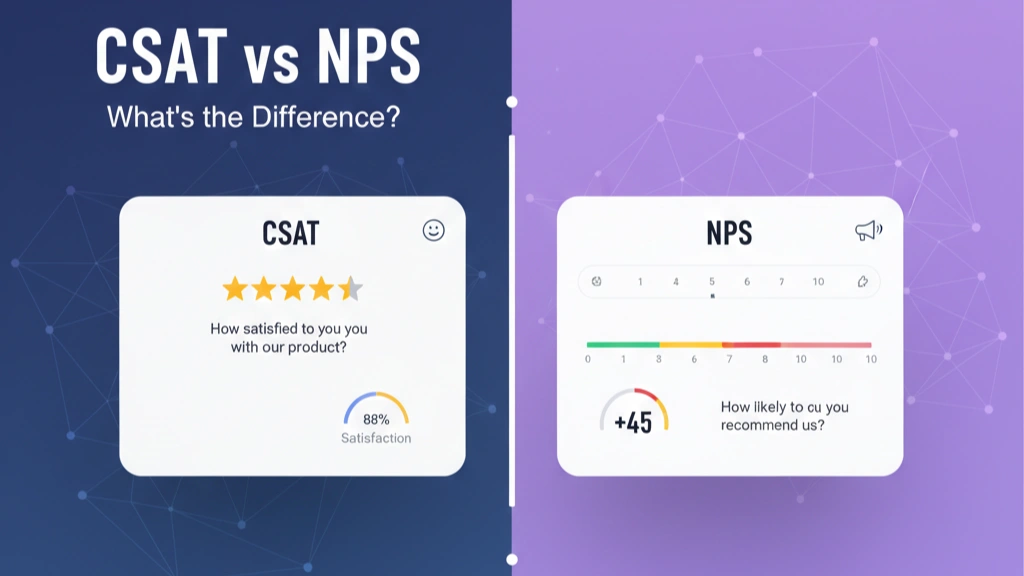
CSAT measures how satisfied customers are with a specific interaction.
Typical CSAT question:
“How satisfied were you with your experience?”
Customers answer on a 1–5 scale.
CSAT is ideal for:
- Support interactions
- Purchases
- Onboarding experiences
- Event feedback
It measures short-term satisfaction.
What Is NPS?
NPS measures customer loyalty and advocacy.
Question:
“How likely are you to recommend us to a friend or colleague?” (0–10 scale)
Customers are grouped into:
- Promoters (9–10)
- Passives (7–8)
- Detractors (0–6)
NPS measures long-term loyalty.
CSAT vs NPS: Key Differences
| Feature | CSAT | NPS |
|---|---|---|
| Focus | Immediate satisfaction | Long-term loyalty |
| Best for | Specific interactions | Relationship health |
| Scale | 1–5 | 0–10 |
| Insight | Operational | Strategic |
When Should You Use CSAT?
Use CSAT if you want to:
- Improve support quality
- Measure checkout experience
- Optimize onboarding
- Monitor service interactions
When Should You Use NPS?
Use NPS if you want to:
- Predict churn
- Measure brand loyalty
- Track retention health
- Identify promoters
Should You Use Both?
Yes — many successful companies use:
- CSAT for tactical improvements
- NPS for strategic insights
If you're designing structured feedback flows, explore: https://pollarity.io/templates/customer-satisfaction-surveys
For advanced analysis and reporting: https://pollarity.io/features/advanced-analysis