The Complete Guide to Customer Satisfaction Surveys (With Examples & Templates)
Customer satisfaction surveys help you measure how customers feel about your product, service, or support experience. When you collect feedback consistently, you can reduce churn, improve retention, and prioritize the changes that matter most.
If you’re building a repeatable feedback loop, this guide covers:
- What a customer satisfaction survey is (and when to use it)
- The difference between CSAT vs NPS vs CES
- Customer satisfaction survey questions you can copy
- Best practices to increase completion rates
- How to analyze results and turn feedback into action
Want a ready-to-use format? Explore our Customer Satisfaction Survey Templates:
https://pollarity.io/templates/customer-satisfaction-surveys
Table of contents
- What is a customer satisfaction survey?
- Why customer satisfaction surveys matter
- CSAT vs NPS vs CES
- 15 customer satisfaction survey questions
- Best practices for designing satisfaction surveys
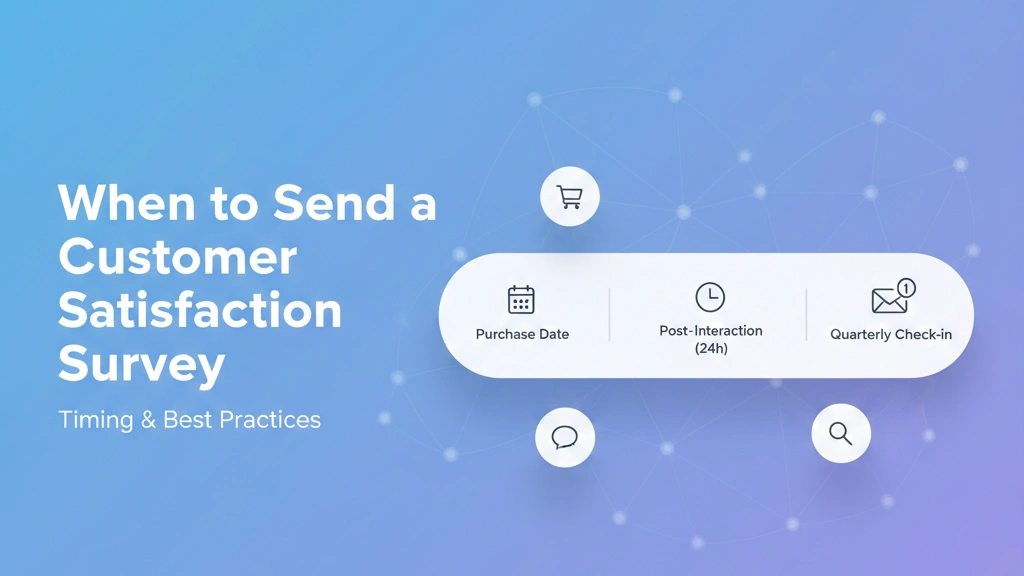
- When to send a customer satisfaction survey
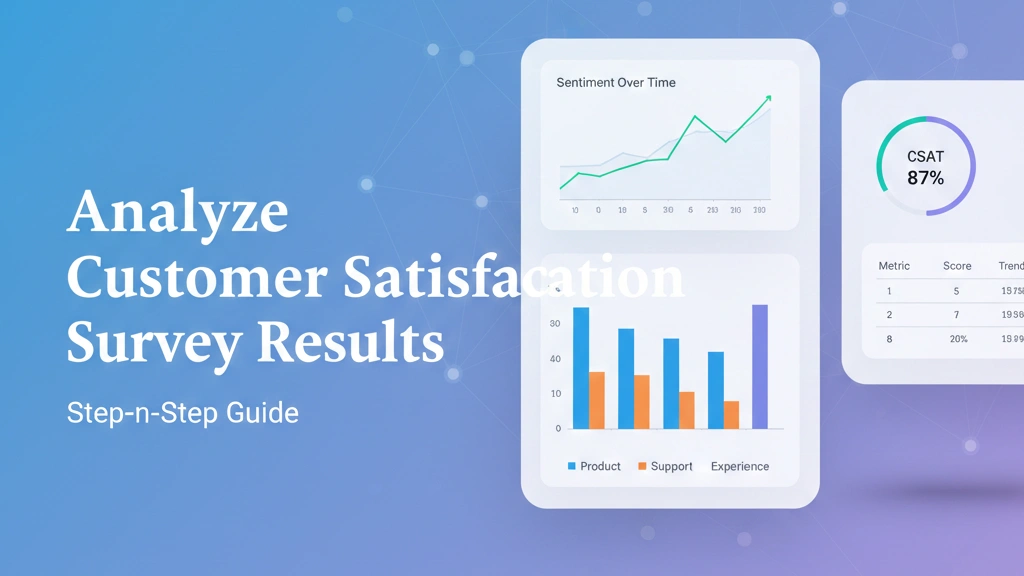
- How to analyze customer satisfaction survey results
- Customer satisfaction survey template
- FAQ
What is a customer satisfaction survey?
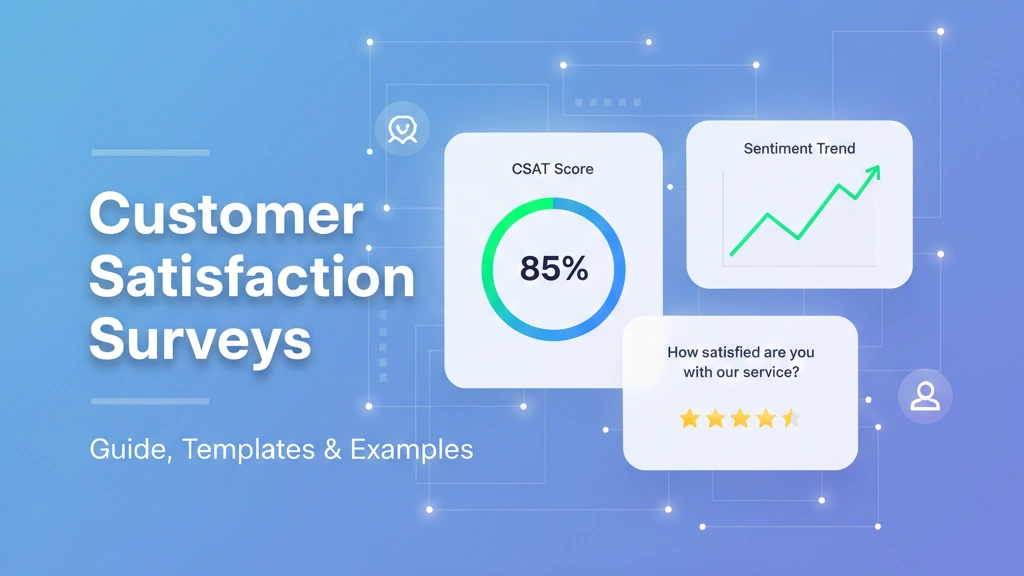
A customer satisfaction survey is a structured set of questions used to measure how satisfied customers are after an interaction or over time. The goal is to quantify customer sentiment and uncover what to improve.
Common moments to send a satisfaction survey:
- After a purchase (e-commerce)
- After onboarding (SaaS)
- After a support ticket is resolved
- After an event or service delivery
- Quarterly / biannually for long-term accounts
Why customer satisfaction surveys matter
Teams that measure satisfaction consistently can:
- Catch issues earlier (before they become churn)
- Improve support and product priorities using real data
- Track customer experience changes over time
- Identify segments with high dissatisfaction (or high loyalty)
- Build a customer-led roadmap
The most valuable part: you’ll stop guessing what customers want.
CSAT vs NPS vs CES
These three metrics answer different questions. You can use one—or combine them depending on your goals.
CSAT (Customer Satisfaction Score)
Best for: measuring satisfaction with a specific interaction
Typical question:
“How satisfied were you with your experience?”
Common scale options:
- 1–5 (Very dissatisfied → Very satisfied)
- 1–7 (more detail)
- Emoji scale (fast and mobile-friendly)
When to use CSAT: support, purchase, onboarding, delivery.
NPS (Net Promoter Score)
Best for: measuring loyalty and advocacy
Question:
“How likely are you to recommend us to a friend or colleague?” (0–10)
When to use NPS: relationship health, quarterly measurement, brand tracking.
CES (Customer Effort Score)
Best for: measuring how easy it was to complete a task
Question:
“How easy was it to resolve your issue today?”
When to use CES: support journeys, self-serve flows, checkout.
Tip: If you’re starting out, use CSAT first. It’s the simplest to interpret and action.
15 customer satisfaction survey questions
Here are customer satisfaction survey questions you can reuse right away. Keep your survey short and pick the most relevant 6–10.
Overall satisfaction (CSAT)
- How satisfied are you with your overall experience today?
- Did we meet your expectations?
- What is the main reason for your score?
Product/service quality
- How would you rate the quality of our product/service?
- Which feature (or part of the service) was most valuable?
- What was missing or confusing?
Support experience
- How satisfied are you with the support you received?
- Was your issue resolved?
- How easy was it to get help?
Loyalty / retention signals
- How likely are you to recommend us? (0–10)
- How likely are you to use us again?
- What would make you more likely to stay with us?
Open-ended (high value)
- What’s one thing we should improve?
- What did we do well that we should keep doing?
- Any other comments you’d like to share?
Best practice: Include at least one open-ended question (like #13). That’s where the best insights are.
Best practices for designing satisfaction surveys
Use these rules to improve completion rate and data quality:
- Keep it under 10 questions whenever possible
- Ask one thing at a time (avoid double questions)
- Use simple scales (1–5 or 0–10)
- Make the survey mobile-friendly
- Avoid leading language (“How amazing was…”)
- Use logic sparingly (only when it reduces irrelevant questions)
- Place the open-ended question near the end
- Test the survey yourself in under 60 seconds
A quick structure that works
- CSAT score
- Reason for score (open-ended)
- 2–4 category questions (product, support, ease)
- One final improvement question
When to send a customer satisfaction survey
Timing matters. Send surveys when the experience is fresh.
- Immediately after purchase: best for transaction feedback
- After onboarding milestone: best for activation quality
- After support resolution: best for service quality
- Quarterly: best for relationship tracking
Tip: If you’re seeing low response rates, shorten the survey and test different send times.
How to analyze customer satisfaction survey results
Once responses come in, use this workflow:
- Track your CSAT average (and watch it weekly/monthly)
- Segment results by customer type, plan, region, or channel
- Review open-ended responses for recurring themes
- Identify “top 3” issues causing negative scores
- Turn themes into actions (fixes, training, messaging)
- Measure again to validate improvement
If you want to go deeper, use reporting and breakdowns to spot patterns:
- Score by timeframe (week vs month)
- Score by segment (new vs returning)
- Score by touchpoint (support vs onboarding)
Explore advanced reporting designed to help teams analyze survey results: https://pollarity.io/features/advanced-analysis
Customer satisfaction survey template
If you want a faster start, use a structured template designed for satisfaction surveys. Templates help you:
- Keep a clean question flow
- Standardize measurement across teams
- Compare results over time
- Avoid common survey design mistakes
Get started here: https://pollarity.io/templates/customer-satisfaction-surveys
FAQ
What is the best scale for a customer satisfaction survey?
A 1–5 scale is the simplest for CSAT. If you want more nuance, use 1–7, but keep it consistent over time.
How long should a satisfaction survey be?
Aim for 6–10 questions. If you need more detail, split into multiple surveys over time.
CSAT vs NPS — which should I use?
Use CSAT for interaction feedback (support, purchase, onboarding). Use NPS for loyalty tracking and longer-term relationship health.
How do I increase survey response rates?
Keep the survey short, send it right after the experience, and make it mobile-friendly. Also include a clear reason: “Your feedback helps us improve.”