RSVP vs Event Registration: What’s the Difference and When Should You Use Each?
If you're planning an event, you’ve likely asked:
Should I use an RSVP form or a full event registration form?
While the two are often used interchangeably, they serve very different purposes. Choosing the wrong one can limit your data collection, reduce organization, or complicate attendee management.
In this guide, we’ll explain:
- What an RSVP form is
- What an event registration form is
- The key differences between them
- When to use each
- How to decide what’s right for your event
What Is an RSVP Form?
RSVP stands for “Répondez s’il vous plaît”, meaning “please respond.”
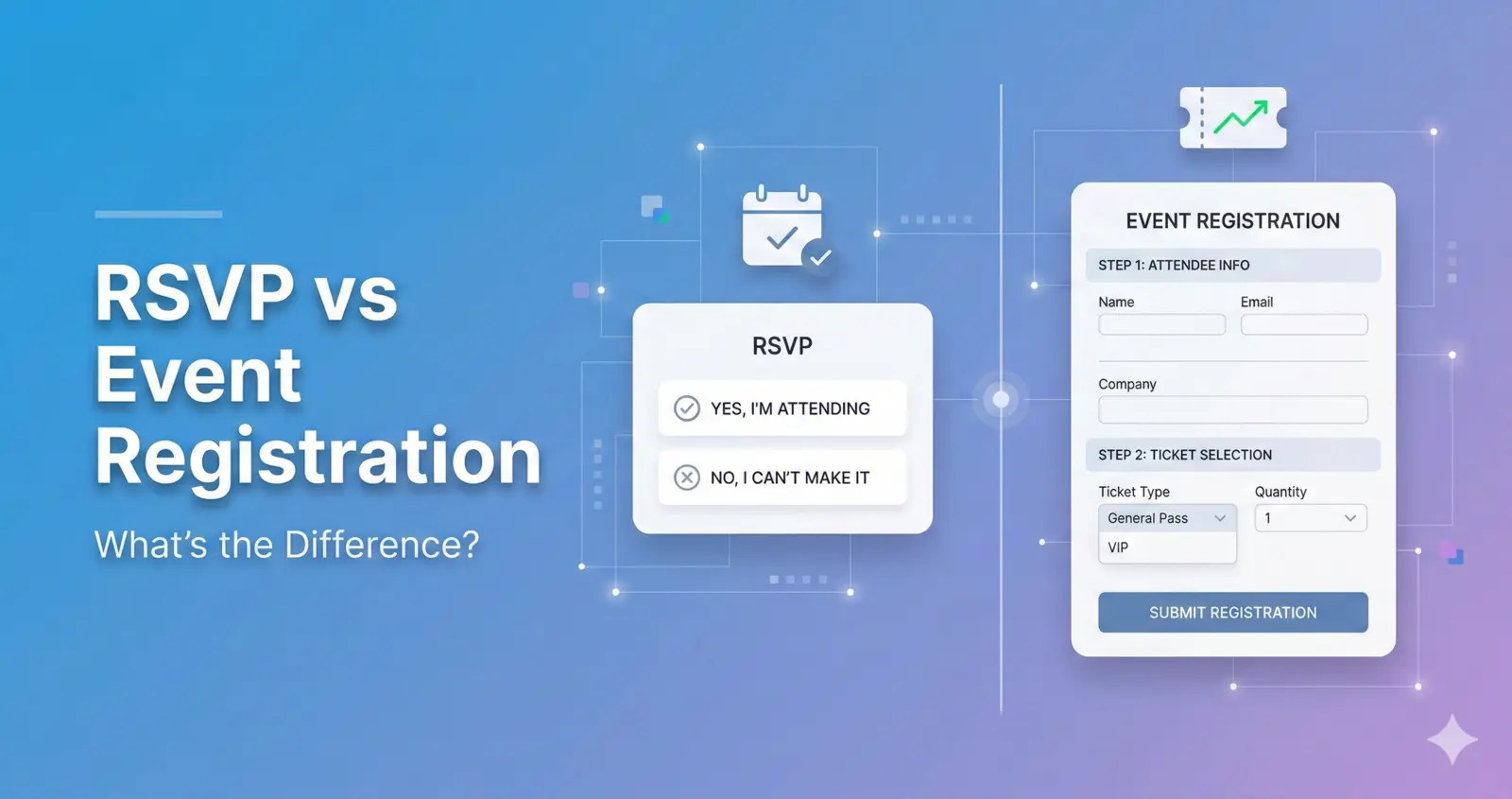
An RSVP form is a simple confirmation tool used to determine whether someone will attend an event.
Typical RSVP Form Fields
- Will you attend? (Yes / No)
- Number of guests
- Name
- Optional message
RSVP forms are ideal when:
- The event is free
- Attendance numbers are flexible
- You only need a basic headcount
- No ticket tiers exist
- No payment is required
RSVP forms are common for:
- Private parties
- Informal meetups
- Small networking gatherings
- Internal company events
They are simple, quick to complete, and reduce friction.
Explore RSVP templates here: https://pollarity.io/templates/rsvp-event-forms
What Is an Event Registration Form?
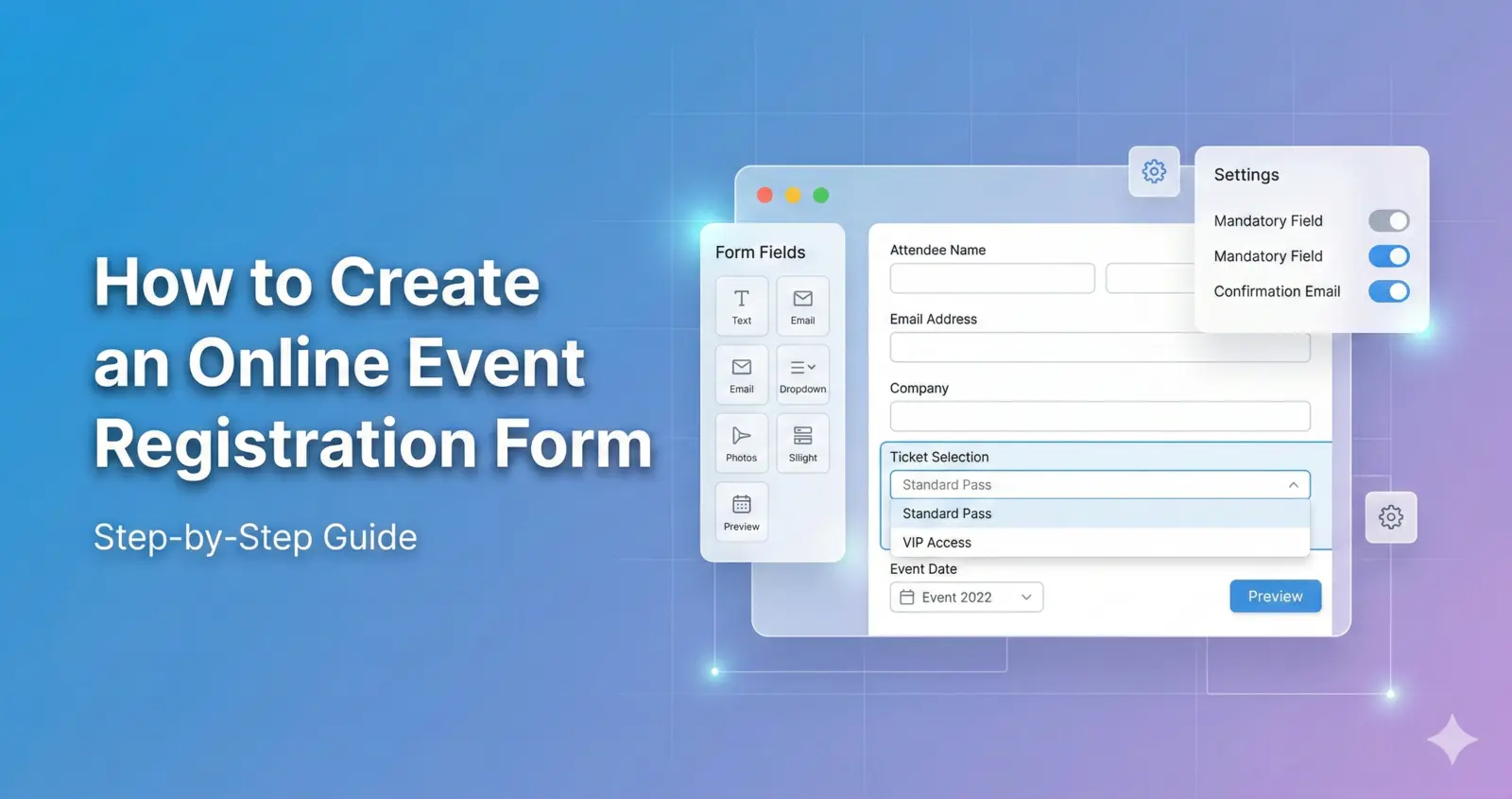
An event registration form is a structured form used to collect detailed attendee information before an event.
Unlike RSVP forms, registration forms often include:
- Full attendee details
- Ticket type selection
- Pricing tiers
- Payment integration
- Conditional logic
- Workshop/session selection
- Capacity limits
Event registration forms are used for:
- Conferences
- Paid webinars
- Workshops
- Fundraisers
- Corporate training sessions
- Public events with ticketing
They allow you to manage attendees professionally and automate processes.
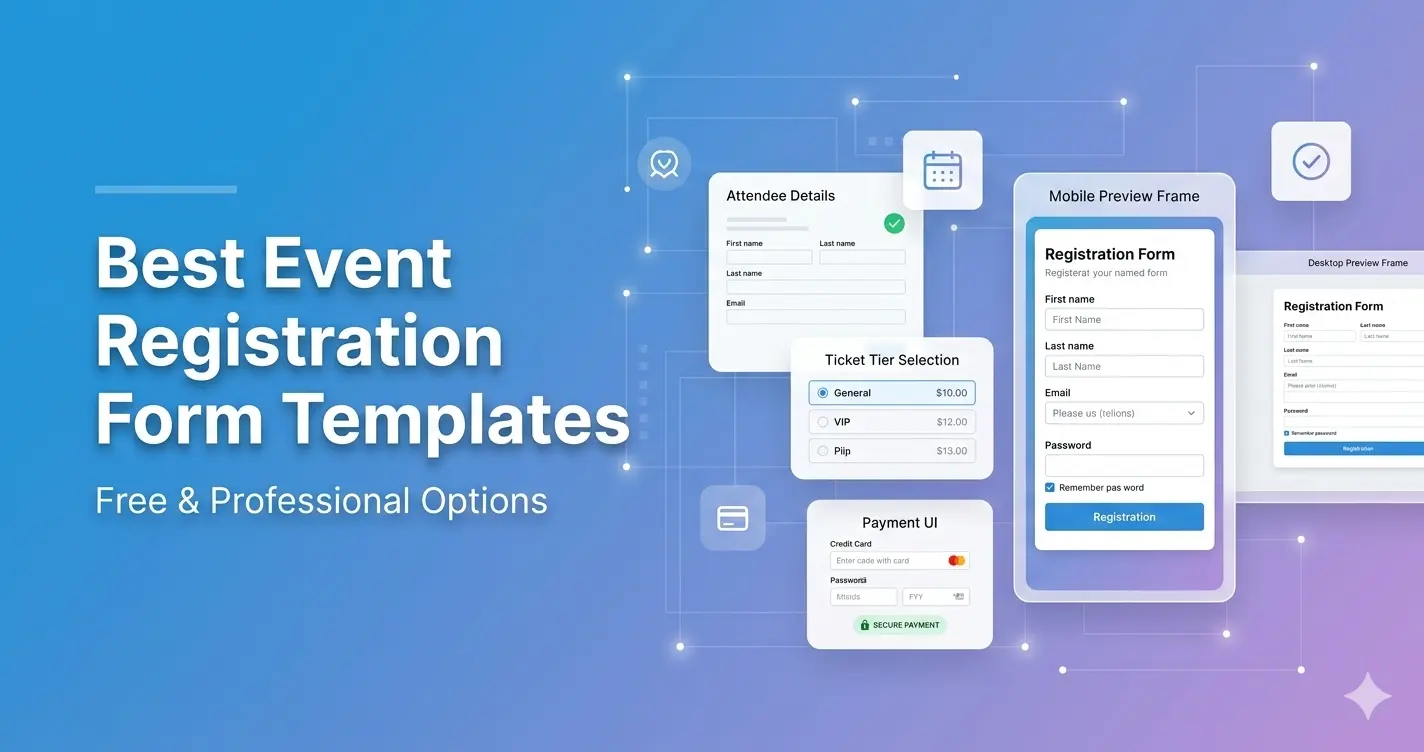
Explore event registration templates here: https://pollarity.io/templates/event-registration-forms
RSVP vs Event Registration: Key Differences
Here’s a direct comparison:
| Feature | RSVP Form | Event Registration Form |
|---|---|---|
| Confirms attendance | Yes | Yes |
| Collects detailed information | No | Yes |
| Supports ticket types | No | Yes |
| Processes payments | No | Yes |
| Limits capacity | Rarely | Yes |
| Uses conditional questions | No | Yes |
| Suitable for paid events | No | Yes |
The difference comes down to complexity and structure.
RSVP is about confirmation.
Event registration is about management.
When Should You Use an RSVP Form?
Use an RSVP form when:
- You only need a headcount
- The event is small or private
- No tickets are sold
- No pricing tiers exist
- You want minimal friction
Example:
You’re hosting a small birthday party or informal business meetup. You only need to know how many people are coming.
In this case, an RSVP form is sufficient.
When Should You Use an Event Registration Form?
Use an event registration form when:
- You’re selling tickets
- You need detailed attendee data
- The event has multiple sessions
- You must manage capacity
- You require payment processing
- You want automated confirmation emails
Example:
You’re hosting a paid conference with multiple ticket levels and breakout sessions.
An RSVP form would be too limited. A structured registration form is necessary.
Can You Convert an RSVP Form Into a Registration Form?
In some cases, yes.
If your event grows in size or complexity, you may need to upgrade from RSVP to full registration.
Warning signs include:
- You start charging entry fees
- You need more than 3–4 fields
- You must segment attendees
- You need payment integration
- You require automated reminders
When this happens, move to a proper event registration form.
Which Option Increases Signups?
RSVP forms typically have higher completion rates because they are shorter.
However, event registration forms are more effective for:
- Paid events
- Large events
- Structured data collection
- Professional event management
The goal is not just signups — it’s useful attendee data.
How to Decide Between RSVP and Registration
Ask yourself:
- Is this a paid event?
- Do I need ticket categories?
- Do I require more than 5 data fields?
- Do I need automated confirmations?
- Is capacity limited?
If you answered “yes” to two or more questions, use an event registration form.
If not, RSVP may be enough.
Final Recommendation
If your event is public, paid, or professionally managed, choose a full event registration form.
If your event is small and informal, use an RSVP form.
Choosing the right option improves:
- Organization
- Attendee experience
- Data quality
- Operational efficiency
FAQ
Is RSVP the same as event registration?
No. RSVP confirms attendance, while event registration collects structured attendee information and may include payment processing.
Can I use RSVP for a paid event?
No. RSVP forms typically do not support ticket pricing or payment integration.
Which form is better for conferences?
Event registration forms are better for conferences because they support ticket tiers, session selection, and detailed data collection.
Related Reading
- The Complete Guide to Event Registration Forms
- 15 Event Registration Form Questions to Include
- How to Increase Event Registrations